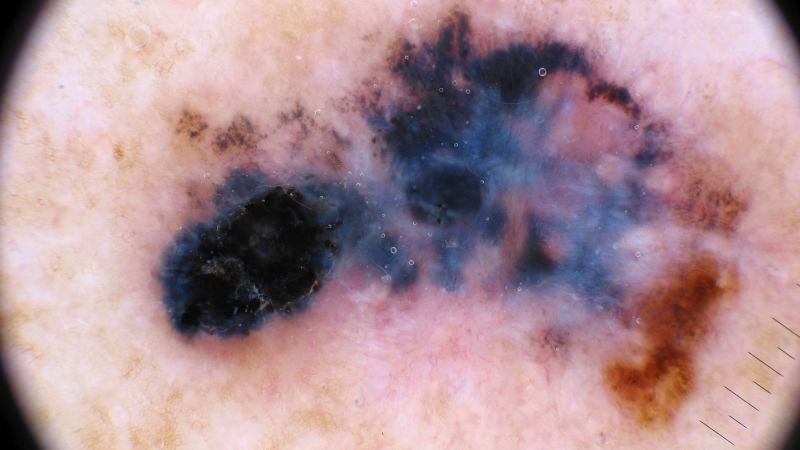
Personalized cancer vaccine shows promise in melanoma trials
Merck and Moderna’s joint effort to develop a personalized cancer vaccine for melanoma has recently demonstrated significant potential, opening new avenues for treatment in oncology, reports BritPanorama.
This vaccine specifically targets mutations unique to individual tumors, training the immune system without the collateral damage often associated with traditional chemotherapy and immunotherapy approaches. In a large-scale trial involving over 1,000 patients with localized melanoma who had undergone surgical removal of their tumors, the vaccine helped to prevent the recurrence and spread of the disease. Moderna anticipates that thousands of melanoma patients could benefit within the first few years of approval.
Dr. Ryan Sullivan, director of the Center for Melanoma at Mass General Brigham Cancer Institute, noted the significance of the study, stating, “It is a big deal for the field in general. With this positive study, there is hope (and likely investment to follow) that these approaches may change the way we treat cancer more broadly.” Dr. Julie Gralow, chief medical officer of the American Society of Clinical Oncology, described the result as “a monumental leap forward,” underscoring the validation of mRNA technology for cancer treatment.
More trials target other cancers
The implications of this research extend beyond melanoma. Merck and Moderna are advancing several large trials for non-small cell lung cancers post-surgery. There are also mid-stage trials assessing combinations for bladder and kidney cancers, alongside early-stage research for pancreatic and stomach cancers. Moderna’s President Stephen Hoge indicated that numerous trial results are expected in the upcoming years.
Moreover, Roche and BioNTech are developing a similar treatment, autogene cevumeran, currently undergoing mid-stage studies for colon and pancreatic cancer patients who have undergone surgery. Results from the colon cancer trial are anticipated in 2027, with pancreatic trial results expected by 2031.
How it works
The treatment protocol, known as intismeran autogene, comprises up to nine doses of Merck’s Keytruda, administered every six weeks, paired with nine doses of a customized mRNA vaccine tailored to elicit an immune response against a patient’s specific cancer cells. The trial is ongoing, with the firms committed to monitoring participants to ascertain the drug’s impact on overall survival.
Previous mid-stage trial data presented in June indicated that this vaccine decreased the likelihood of cancer recurrence by 50% and the risk of metastasis by 59% compared to Keytruda alone. The trials reported no new side effects due to the integration of the mRNA vaccine.
Dr. Elizabeth Buchbinder, a melanoma specialist at Mass General Brigham, expressed optimism about the combination therapy’s efficacy, noting that many cancers, like melanoma, exhibit numerous mutations, suggesting wider applicability for personalized vaccines in oncology.
The emerging research highlights a growing excitement around the potential of personalized cancer vaccines, marking a notable shift in cancer treatment paradigms.


