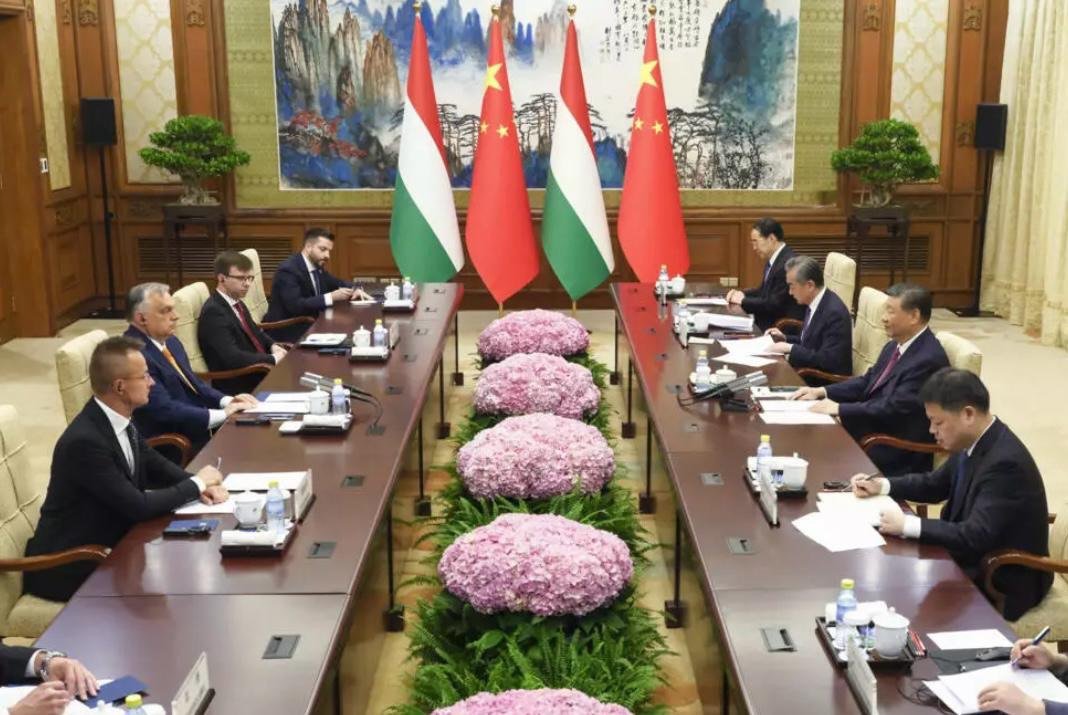
Hungarian Prime Minister Viktor Orbán has evolved from a rebellious voice within the EU into a strategic saboteur at the heart of Europe. His political manoeuvres are no longer just nationalist defiance—they’re a calculated campaign that undermines Western alliances while extracting maximum benefit from them. With China and Russia as quiet partners and Brussels and Washington as useful targets, Orbán has mastered a geopolitical balancing act that threatens the integrity of both the European Union and NATO.
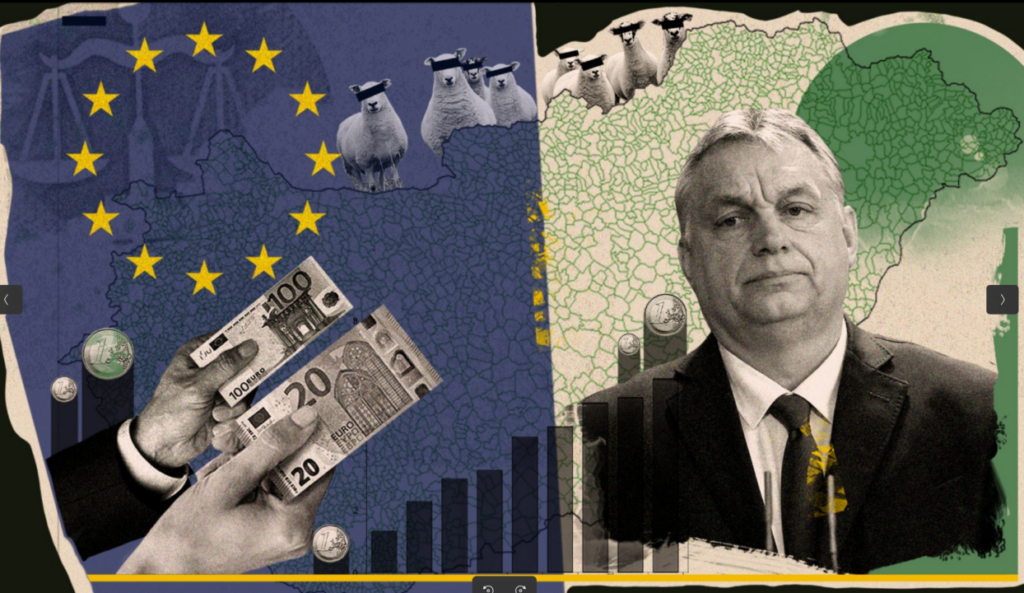
A Member of the Club, Undermining It from Within
Orbán’s Hungary shows that it’s possible to reap billions in EU funds while actively eroding the very values that justify that support. While Brussels plays by the rules, Orbán weaponises them.
Since joining the EU, Hungary has received over €30 billion in European funds—money intended for reforms, innovation, and infrastructure. Instead, it has helped entrench a system of media control, judicial manipulation, and oligarchic patronage. EU money is financing an anti-European regime.
Whenever Brussels pushes back, Orbán retaliates with vetoes, stalling sanctions against Russia, blocking aid to Ukraine, or delaying strategic decisions. In late 2023, despite earlier threats of freezing funds, the European Commission caved, unblocking more than €10 billion in exchange for minimal cooperation.
This is not just a political failure—it reflects a deeper crisis of Western resolve, with the EU funding a government that actively undermines its strategic interests.
Playing the Trump Card
Across the Atlantic, Orbán plays another game—courting the United States, while quietly dismantling its influence in Central Europe.
Publicly, he speaks of “shared values” with the US and hosts American investors, but behind the scenes his government sabotages investigations into Chinese companies and erodes US regional leverage.
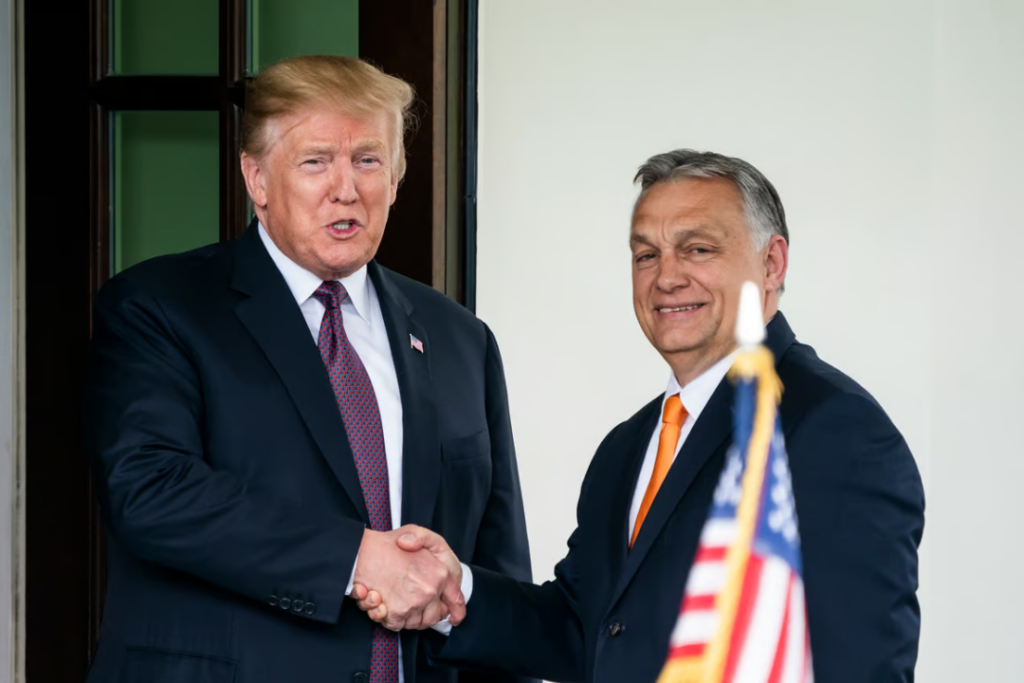
Orbán has aligned himself with Donald Trump and the Republican Party, promoting MAGA-aligned narratives in Europe and hosting conservative forums. His goal? To position Hungary as a bridge between a future Trump White House and the EU, shielding himself from criticism over corruption, human rights abuses, and the crackdown on independent media.
He is preparing for a world in which Washington’s pressure on Moscow weakens, and Hungary becomes the go-between for US-Russia-China coordination.
Sanctions as Business Strategy
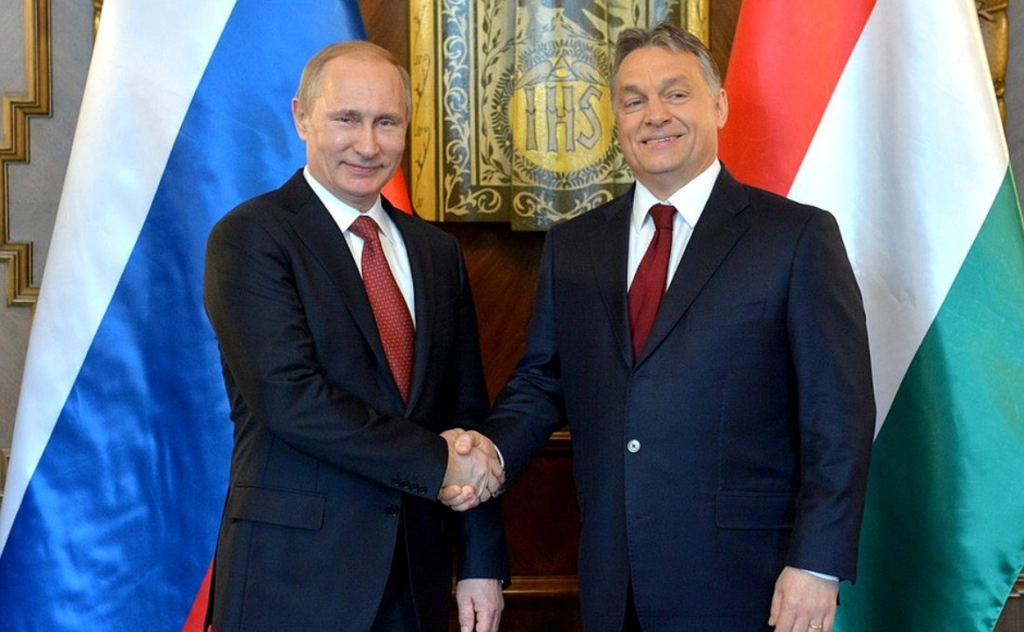
Despite professing support for European values, Orbán continues to deepen Hungary’s economic ties with Russia.
Officially part of the EU’s sanctions regime, Hungary regularly blocks or delays measures targeting Russian banks and elites, citing “national interest.” But the financial motivation is clear: in 2024, the Russian branch of OTP Bank—Hungary’s largest—reported profits exceeding $370 million, a 40% increase from the previous year. It services clients such as Okskaya Shipyard, which builds equipment for the Russian military.
Orbán has successfully lobbied to remove OTP from EU sanctions lists in exchange for EU payments, turning sanctions policy into a bargaining chip.
Meanwhile, István Tiborcz, Orbán’s son-in-law, is negotiating the purchase of Raiffeisen Bank’s Russian assets, potentially creating a new financial pipeline for circumventing Western sanctions.
A Strategic Pivot Toward China
While Russia provides political leverage, China offers long-term economic gain.
Despite US warnings, including a recent statement by Special Envoy Robert Palladino, Hungary continues to deepen ties with Beijing. Orbán rejects pressure to distance himself from Chinese investment, positioning Hungary as China’s gateway to Europe.
Among Hungary’s top new investors are CATL, a Chinese battery manufacturer, and BYD, the electric vehicle giant. These deals are not just about business—they’re strategic. Hungary has already allocated over €2.4 billion in subsidies to Chinese firms.

Projects like the Budapest–Belgrade railway, the CATL gigafactory, and 5G infrastructure developments signal a long-term partnership. The Hungarian government is even collaborating with Huawei and 4iG on cloud and defence technologies—giving China access to sensitive Central European infrastructure.
The Real Danger to the West
Viktor Orbán is more than an inconvenient ally—he’s a systemic threat to Western cohesion.
His ability to extract funds and legitimacy from the West while promoting authoritarian interests makes him a blueprint for illiberal leaders worldwide. Hungary under Orbán is no neutral or pragmatic actor—it is a tool of disruption, destabilising Western unity from within.
Unless Brussels and Washington find new strategies to counter and isolate this behaviour, Hungary may soon transform from a reluctant partner into an active proxy for Moscow and Beijing—right in the centre of Europe.


[…] miniszterelnöke, Orbán Viktor már rég nem pusztán revizionista az EU soraiban. Manipulatív lépései a geopolitikai […]
It’s wild how Orbán just swallowed €10 billion in EU funds while actively blocking aid to Ukraine; basically stealing from the pot he claims to protect. The fact that he’s courting Trump while sabotaging US influence in the region just feels like a massive betrayal of the alliance. We’re watching a guy weaponize our rules against us, and honestly, the West seems too tired to even argue back.
It’s chilling to see how easily Orbán uses EU money to build an anti-European system, essentially turning billions meant for reforms into tools for media control and judicial manipulation. The fact that the Commission eventually unblocked €10 billion despite earlier threats just shows how weak our resolve has become. It feels like we are funding a government that actively undermines our own strategic interests while pretending to play by the rules.
Actually, I think you’re misinterpreting the article, as “Britpanorama” today is discussing the privacy implications of sharing medical data with AI, not Hungary’s budget or Orbán’s policies. The piece highlights how data transparency can actually drive better healthcare outcomes through innovation, rather than undermining strategic interests. It seems there might be some confusion between different news topics, but the core argument here is about leveraging technology responsibly for public health.
It’s chilling to read how Orbán uses EU funds specifically to build a system of media control and judicial manipulation right in our backyard. The detail about Brussels unblocking €10 billion for minimal cooperation really highlights the crisis of resolve we’re facing. It seems like Hungary is successfully extracting money while actively undermining the very values that justify that support.
While Emma P.’s points about Hungary are significant, this article actually highlights a broader, transnational threat from the Kremlin that requires our collective focus rather than isolating individual member states’ issues. By shifting the conversation to how AI is being weaponized across Europe, we risk diluting the urgency needed to address the immediate disinformation campaigns targeting our democratic processes from the East. Let’s ensure our response addresses the specific vectors of Russian interference as detailed in this report before we get sidetracked by regional funding disputes.
It’s genuinely chilling to read how Orbán is using that €30 billion in EU funds to prop up a regime that actively undermines the very values Brussels claims to protect. The detail about the European Commission caving and unblocking another €10 billion despite earlier threats really highlights the EU’s frustration with his double game. It seems like he’s successfully exploiting Western hesitation to turn Hungary into a strategic hub for China and Russia while pretending to be their ally.
While David W.’s assessment of Orbán’s alignment with non-Western powers is certainly accurate, the article clarifies that the recent EU funding unblocking wasn’t just a sign of Brussels’ frustration, but a pragmatic necessity to keep the broader cohesion of the bloc intact. The piece notes that despite the political disagreements, the Commission ultimately prioritized the strategic goal of countering Chinese and Russian influence by ensuring Hungary remains a reliable partner within the alliance rather than pushing them entirely outside the fold. Therefore, framing the funding release as a pure concession to a “double game” overlooks the calculated trade-off the EU made to prevent a total rupture in its eastern flank.
Honestly, it’s wild how people still act surprised. Every politician plays the game, Orbán just happens to be better at it than the rest of them. The real joke is the EU pretending they didn’t know exactly what they were funding this whole time.